
A bunion is a bony prominence that develops at the base of the big toe. While it can look alarming, there is quite a lot we can do to manage symptoms and slow progression.
By the numbers
Quick facts
For Bunions
1 in 3
Adults over 65 have some degree of bunion deformity
Women
Are affected significantly more often than men
Hereditary
Foot shape plays a strong role in bunion development
Conservative
Management relieves pain in the majority of cases
At a glance
Know the basics
What it is
A bunion (hallux valgus) is a deformity where the big toe gradually angles toward the second toe, causing the joint at the base of the big toe to protrude outward. Over time, this can lead to pain, difficulty with footwear, and changes in how you walk.
Bunions are progressive – they tend to worsen slowly over time – which is why early assessment and management matters. While podiatry cannot reverse the structural change, there is a great deal we can do to reduce symptoms and slow progression.
Who it affects
- People with a family history of bunion deformity
- Women more often than men, due to footwear styles and anatomy
- Those with hypermobile joints or flat foot mechanics
- People who regularly wear narrow or high-heeled shoes
- Adults over 40, where joint degeneration contributes to progression
Watch for
Common symptoms
Notice any of these? Book a check-up. These signs are often more manageable when caught early.
Bony prominence
A visible lump at the base of the big toe joint, caused by the progressive misalignment of the first metatarsal. The bump can become tender and inflamed.
Toe deviation
The big toe gradually shifts toward the second toe. In more advanced cases it may cross over or under it, affecting the overall mechanics of your foot and gait.
Joint pain
Aching or throbbing around the big toe joint, particularly after activity or in constrictive footwear. Swelling can make the joint appear noticeably larger.
Footwear friction
The prominent joint rubs against the inside of shoes, leading to redness, callus formation, or blistering. Standard footwear becomes increasingly uncomfortable.
Footwear difficulty
The changed shape of the forefoot makes standard shoe widths uncomfortable. Many people with bunions need wider fittings or specialist footwear to get through the day.
Reduced movement
Stiffness in the big toe joint limits how far it can bend during walking. This affects your gait pattern and places additional load on surrounding structures.
Assessment
How we assess it
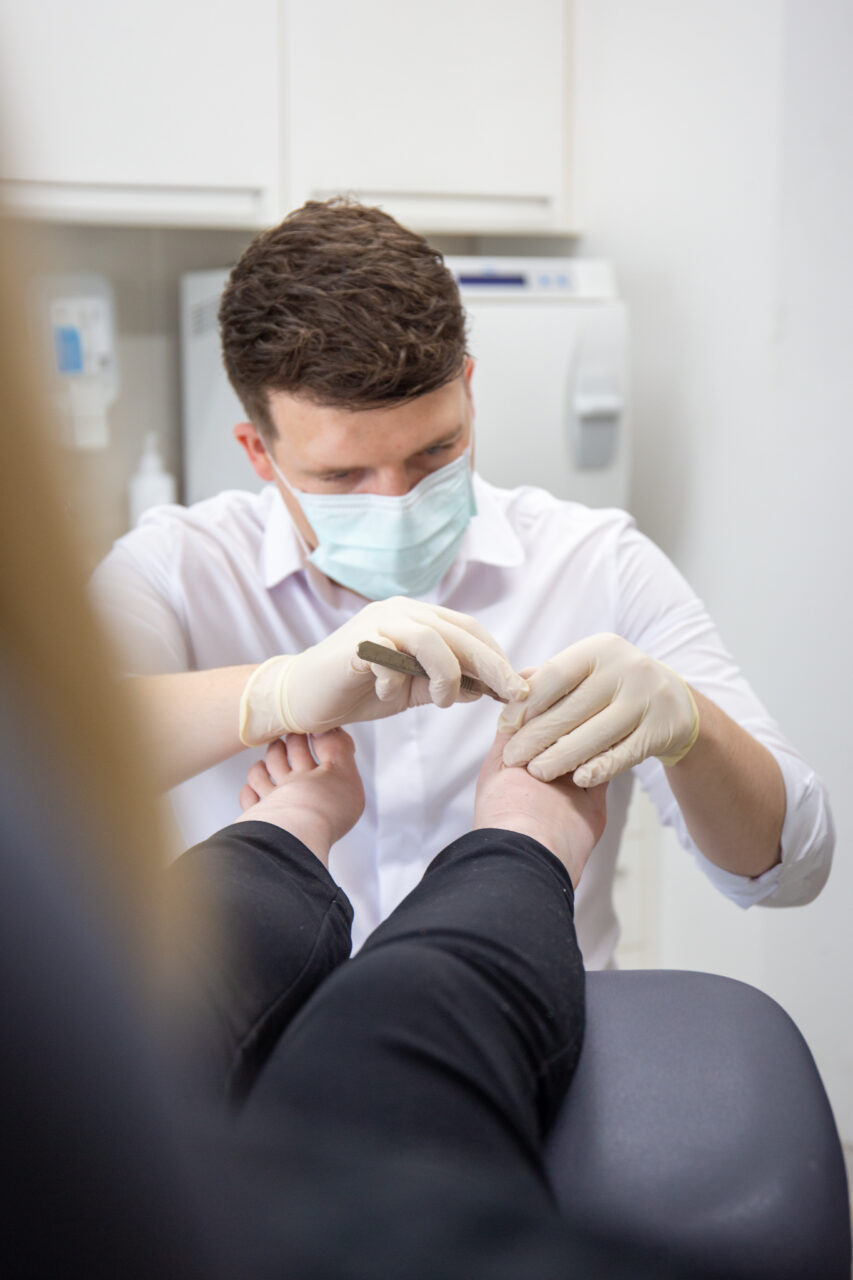
We assess the joint, your foot mechanics, and your footwear. We look at how the bunion is affecting the way you move and identify any secondary concerns – such as pressure on adjacent toes, callus development, or changes in gait.
From there, we can provide a clear picture of what stage the bunion is at and what options are available.
Treatment
How we treat it
Conservative management can be very effective in reducing pain and slowing progression. Treatment options may include:
- Footwear advice – wider, more accommodating shoes to reduce pressure on the joint
- Orthotic therapy to address underlying biomechanical factors
- Padding and offloading to manage skin irritation
- Exercises to maintain joint mobility
- Referral for surgical assessment if conservative care is not providing sufficient relief
We aim to keep you comfortable and mobile for as long as possible with the least invasive approach.
Related Conditions
Conditions we also treat

Book your visit
Not sure what to do about a bunion?
Book an assessment and we'll work out what stage it's at and what your options are.